The weather here
11 September 2026
A film shot in the gulf in 1956 turned Saint-Tropez into a global destination. The town museum is running an exhibition on it until March 2027.
View our homesOur tenants often come from elsewhere, and after a few weeks they all ask the same question: why this small port, rather than another? The answer lies largely in a film released seventy years ago, and in an exhibition you can see right now, twenty minutes away by boat.
Roger Vadim shot Et Dieu créa la femme in the gulf between 3 May and 7 July 1956. Raoul Lévy produced, Armand Thirard shot the picture, Paul Misraki wrote the music. Brigitte Bardot plays Juliette Hardy, alongside Curd Jürgens, Jean-Louis Trintignant and Christian Marquand. The film opened in Paris on 28 November 1956 and runs ninety minutes.
Shooting on real locations was unusual at the time. Films were made in the studio then, and Vadim preferred the street, the port and the beach. Only the interiors were shot at the Victorine studios in Nice. That method foreshadows what the New Wave would do a few years later.
The film shows a Saint-Tropez still barely built up, with few cars and natural beaches and no private beach clubs. That is the image which then travelled around the world.
The Cinémathèque française sums up the effect in one sentence: the film propelled Bardot to stardom and made Saint-Tropez the most fashionable destination.
The success came from abroad first. The French reception was lukewarm, then the film took hold across Western Europe, in Japan and even inside the Soviet bloc. In the United States, attempts by religious organisations to have it banned added to its fame. The film was even re-released in cinemas, which was rare at the time.
Parisians then discovered the Mediterranean through that door. In a few seasons the gulf went from fishing port to international destination. The town of Saint-Tropez puts it simply today: this is the film that tied Saint-Tropez to the history of cinema for good.
We stay careful with figures. No public study measures the share of tourist numbers attributable to this film, and we will not invent a percentage.
The link is documented by the institutions, without being quantified.
A three-month shoot in spring 1956, and a fishing port became a global destination.
Born in Paris on 28 September 1934, Brigitte Bardot died on 28 December 2025 in Saint-Tropez, at the age of ninety-one. Her funeral took place on 7 January 2026 at the church of Notre-Dame-de-l'Assomption. The town of Saint-Tropez paid tribute to her as its most brilliant ambassador, resident in the town for more than fifty years.
Her career runs to some forty films, including La Vérité by Henri-Georges Clouzot in 1960 and Le Mépris by Jean-Luc Godard in 1963. She left the cinema in 1973, after L'Histoire très bonne et très joyeuse de Colinot Trousse-Chemise, directed by Nina Companeez.
She then devoted her life to the animal cause. She set up her foundation in 1986, and it was recognised as a public-interest body by decree on 21 February 1992.
Its purpose is the protection of wild and domestic animals, the fight against animal suffering and stronger regulation internationally. Its board includes representatives of the Interior, Ecology and Agriculture ministries.
One sentence, published on the foundation's website, sums up that turning point: “I gave my youth and my beauty to men, I give my wisdom and my experience to animals.”
The musée de la Gendarmerie et du Cinéma, the town museum of Saint-Tropez, is showing Et Dieu créa la femme, 70 ans de légende, from 16 April 2026 to 7 March 2027. The exhibition covers the film's origins, its impact, its modernity and its legacy.
The museum stands at 2 place Blanqui, a step from the port. Entry costs €5 full price and €3 concession, for twelve to eighteen year olds, students under twenty-six and jobseekers. It is free for under-twelves.
Opening hours follow the season. From September to October, the museum opens from 10am to 6pm.
From November to February, it closes at 5pm. From March to June, it opens from 10am to 6pm, then from 10am to 7pm in July and August. The telephone number is 04 94 55 90 20.
Winter is the right moment for this visit.
The museum is quiet, the crossing from Sainte-Maxime takes twenty minutes, and the exhibition stays open until March 2027. What is more, out of season the ferry and the parking stop being an issue.
Saint-Tropez has never stopped attracting film shoots since 1956, and the town museum keeps the record of them. It occupies the former gendarmerie, itself a setting that made it onto the screen, which explains its double name and its double collection.
For someone living in Sainte-Maxime, all of this fits into half a day. You take the boat in the morning, you visit, you have lunch on the port, and you come back on the afternoon ferry. Out of season, the quays are clear and you walk through the museum without queueing.
It is one of the least told arguments for living here all year. The area stays equipped like an international destination, with the museums, the exhibitions and the events that go with it, but ten months out of twelve it feels like a small town.
The prices, opening hours and exhibition dates above were checked on 11 September 2026 on the Saint-Tropez town website. A call to the museum before you set off remains the best way to confirm opening on a public holiday.
The gulf has not always looked towards tourism. Saint-Tropez lived on fishing and sea trade, and Sainte-Maxime, on the other shore, kept the same character of a small Var port. The film's images show that state of things: few buildings, few cars, beaches with no private clubs.
That period has left traces you can still see. The square tower and the church of Sainte-Maxime, the old fabric of the pedestrian streets, the shape of the port: all of it predates the tourist wave and outlives it. A walk through the old centre out of season is enough to measure it.
The change was fast, and it touched the two shores unevenly.
Saint-Tropez became an international destination, while Sainte-Maxime kept the life of a town, with its schools, its local shops and its permanent population. That difference is why you can still find a home here for the year.
The musée de la Gendarmerie et du Cinéma occupies the former gendarmerie of Saint-Tropez, a setting that became famous on screen itself. The building and the collections therefore tell two stories at once, that of the place and that of the film shoots in the gulf.
The current exhibition, Et Dieu créa la femme, 70 ans de légende, runs until 7 March 2027. It covers the film's origins, its impact, its modernity and its legacy. It is the best way in to understanding what 1956 changed here.
A word on images, since the question comes up often. Production stills and press photographs from that era remain protected by the photographer's copyright, for seventy years after their death.
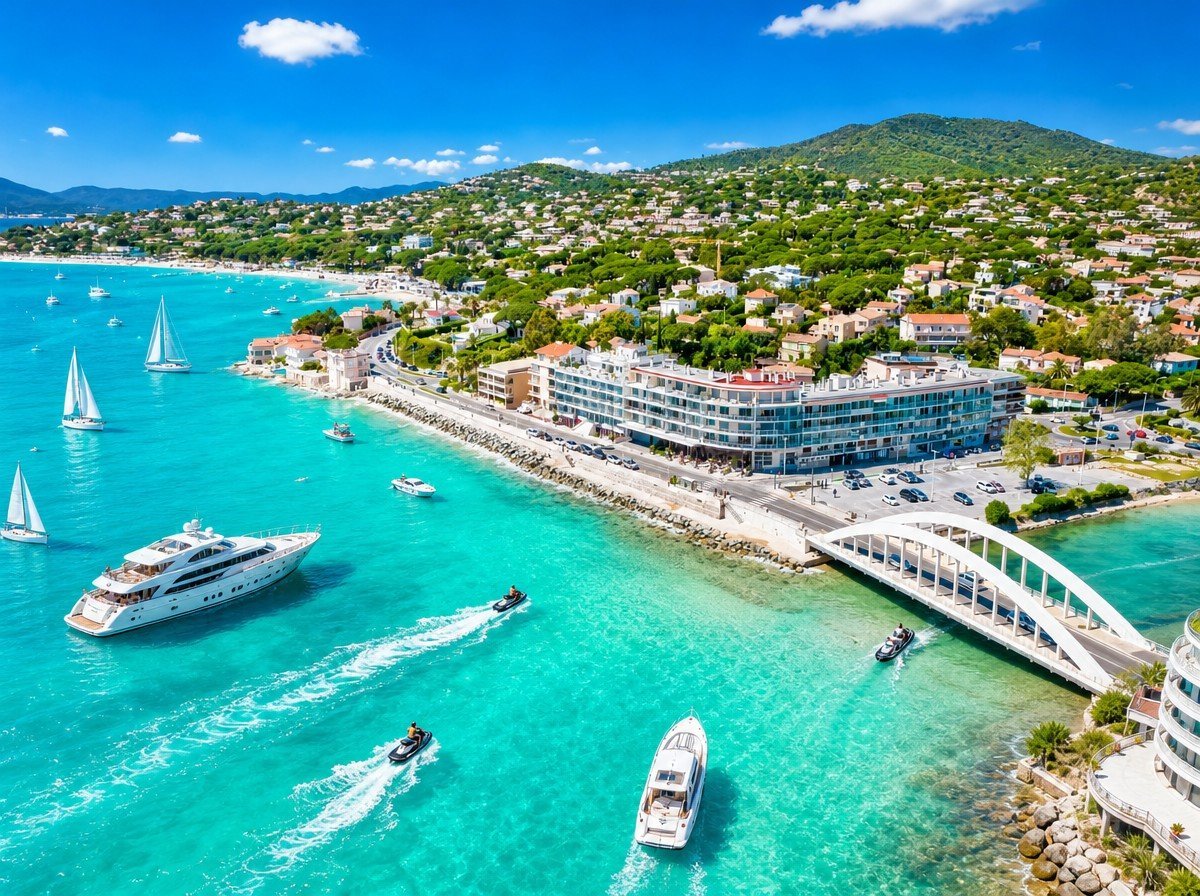
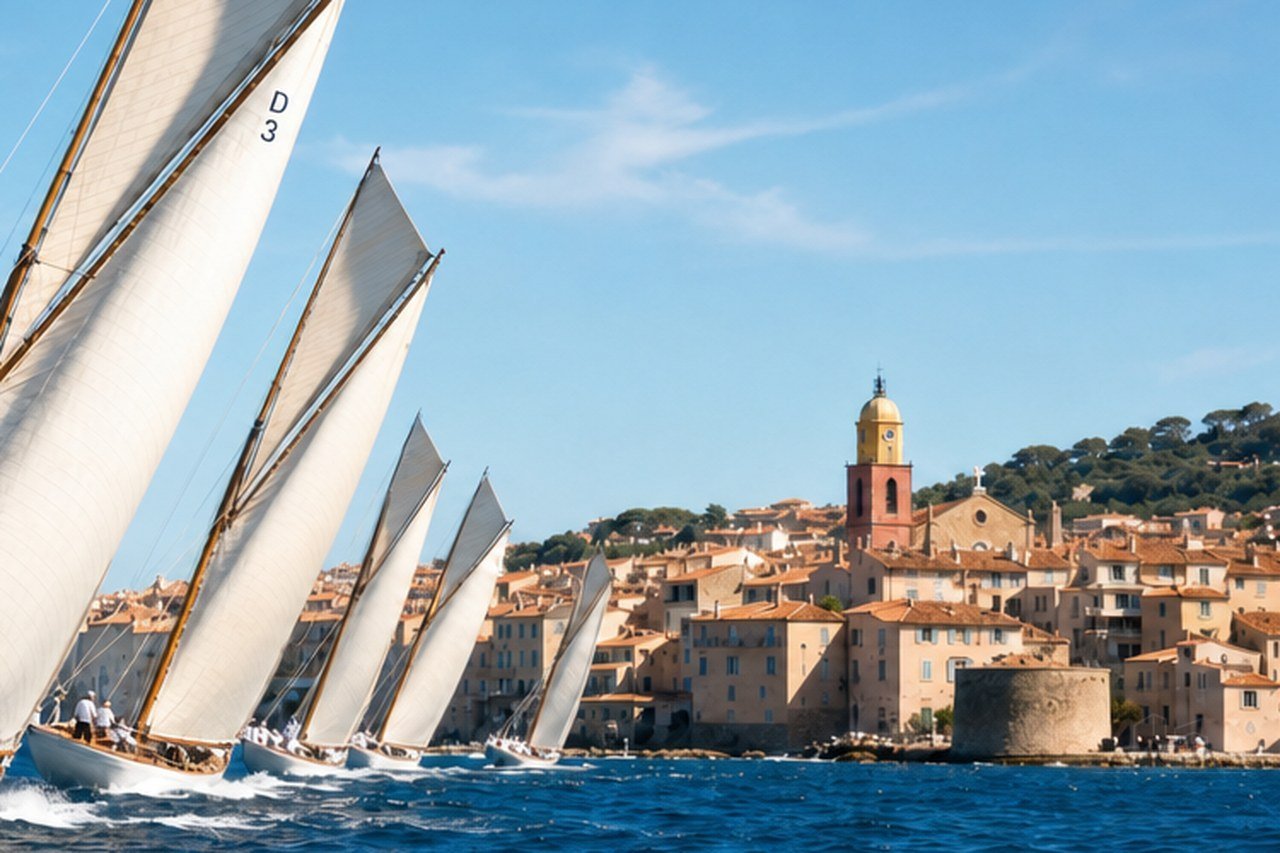
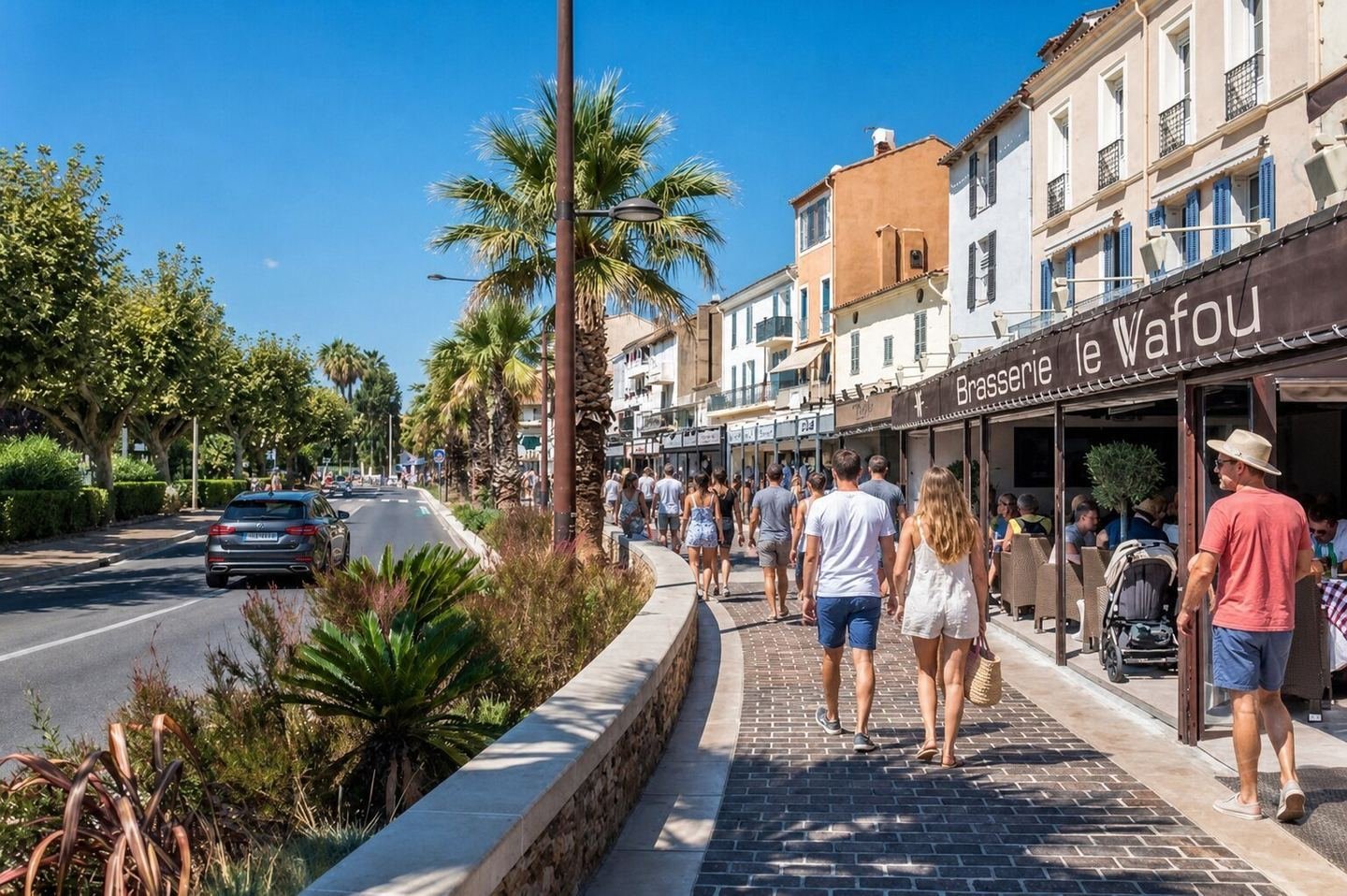
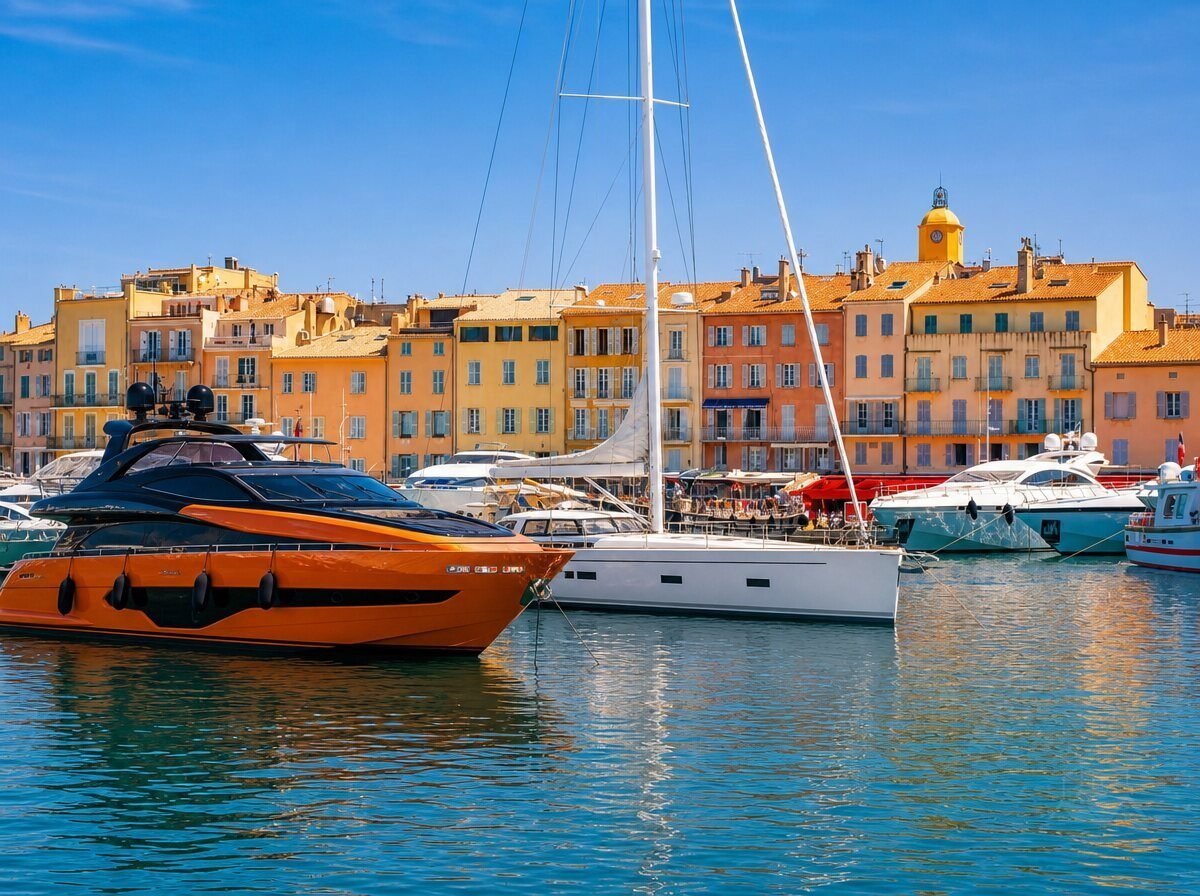
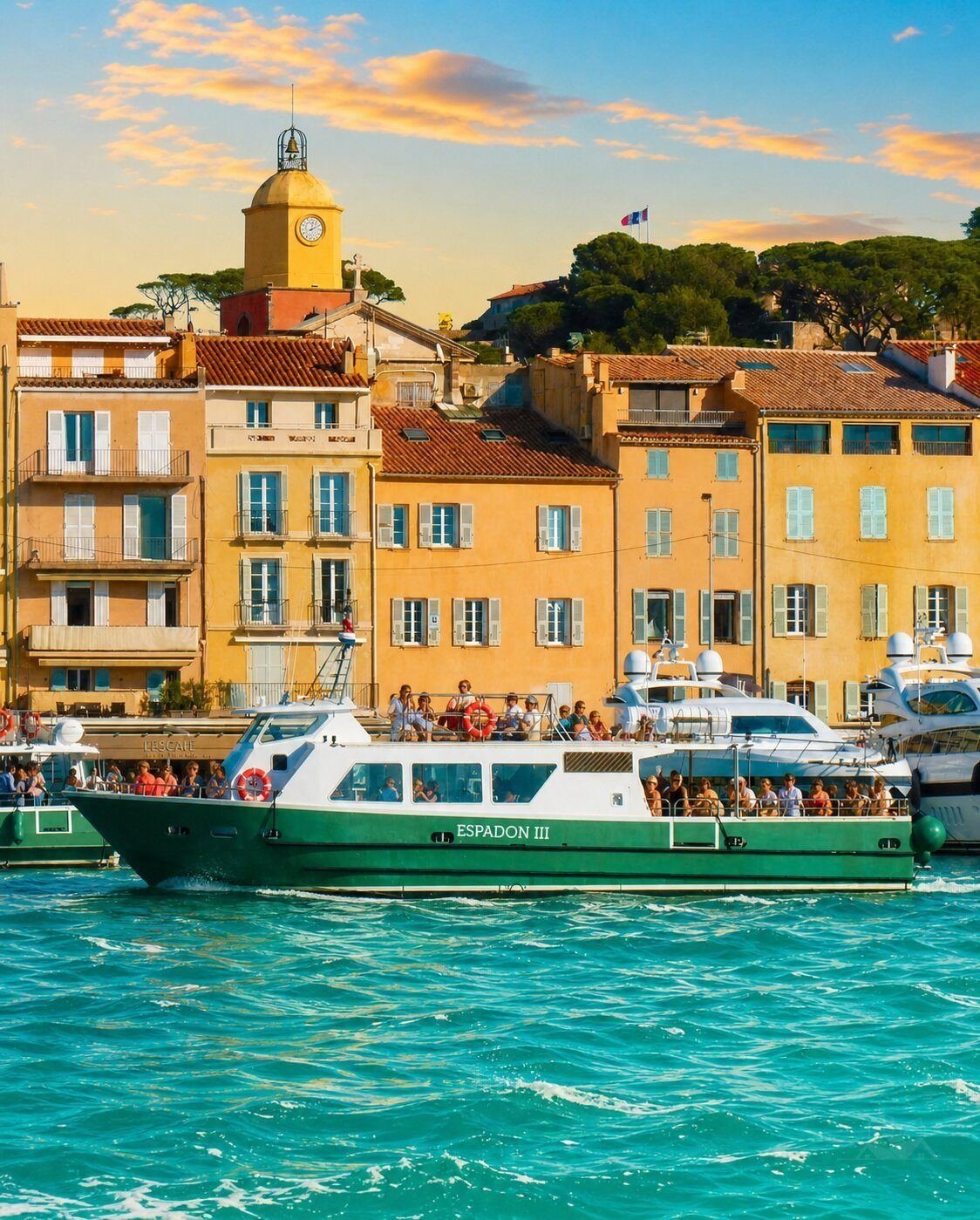
So we publish none of them, and we illustrate this article with our own views of the gulf.
A cultural visit to Saint-Tropez works better in winter than in August. The quays are clear, you walk through the museum without queueing, and the ferry still runs a daily service, with nine sailings a day in November and December.
On our side of the gulf, the same logic holds for everything else. The library, the cinema and the amenities of Sainte-Maxime run all year, for a permanent population of about fourteen thousand. In summer, those same amenities serve a population on a completely different scale.
That is the heart of the matter, and it is what we repeat at every viewing. Live here year-round and you get a region equipped like an international destination, while living in a town of fourteen thousand people ten months of the year.
A film does not create a destination on its own, but it can reveal one. The gulf already had its harbour, its light and its hinterland. The 1956 film gave them an image, and that image travelled further and faster than any advertising campaign.
Seventy years on, the effect still shows in the way the area is organised. Saint-Tropez itself lives largely off tourism and boating. The neighbouring towns have shared out the other roles: housing, schools, everyday shops and services. Sainte-Maxime plays that part on the northern shore.
That is why year-round housing has held on here, while it has grown scarce elsewhere in the gulf. We have been letting here since 1971, before the wave and after it, and we have never switched to holiday lets.
The film is easy to watch again, and it is better than its reputation. Today you watch the setting as much as the plot: the harbour before the yachts, the lanes before the boutiques, the beach before the beach clubs. It is a record of a place as much as a piece of cinema.
The exhibition at the town museum rounds out that view until March 2027. For five euros and twenty minutes on the boat, it is the best-value cultural outing in the gulf, and it works beautifully on a winter afternoon.
Afterwards, walk up to the citadel or take a turn around the harbour. You will see the film set and today's town in the same frame. It is the best way to understand what has changed, and what has not.
Sainte-Maxime has its own cultural venue, and its name speaks of cinema. Le Carré Leon Gaumont brings together the town's media library and cinema, right in the centre. It runs all year, for a permanent population of around fourteen thousand.
That is a real difference from a purely seasonal resort. A cultural venue open in February implies an audience in February, so residents all year, and so homes let all year. The three go together, and that is exactly what we work to sustain at our own scale.
Several of our homes sit on rue Léon Gaumont, a few steps from this building. That is no accident either: this is the centre, with its shops, its services and its winter life.
One last marker, to give you the scale. The Saint-Tropez museum opens from 10am to 6pm in September and October, then from 10am to 5pm from November to February. The shuttle leaves Sainte-Maxime all year. A visit therefore fits into an afternoon, even in midwinter.