The weather here
11 September 2026
In late September, two hundred and sixty sailing boats cross the gulf. From Sainte-Maxime, the crossing takes twenty minutes.
View our homesEach autumn, the Gulf of Saint-Tropez hosts one of the finest gatherings of sailing boats in the Mediterranean. The 2026 edition of Les Voiles de Saint-Tropez runs from 26 September to 4 October, with racing from Monday 28 September to Saturday 4 October. The Société Nautique de Saint-Tropez, a club founded in 1862, organises the event.
Living in Sainte-Maxime puts this event twenty minutes away by boat. It is one of the most tangible advantages of the northern shore, and our tenants enjoy it every year without booking or planning ahead.
The official website announces around two hundred and sixty boats for 2026, including a record fleet of nearly fifty Maxis. Three families share the water: the Tradition boats, some of them a century old, the Maxi Yachts, and the Moderns. Starts are given around eleven o'clock or midday, off the Portalet and Pampelonne.
Thursday 1 October is challenge day, and that is the one to note. The Club 55 Cup sets off at midday from the Portalet. The Régate des Centenaires and the Trophée Gstaad YC start at half past twelve, then the challenges at half past one. At half past six, the crews parade along the harbour.
Other moments punctuate the week. The blessing of the boats opens Monday.
On Wednesday 30 September, the Maxis rest and a boules competition takes over the place des Lices. The Village des Voiles stays open every day from nine in the morning to nine in the evening, with free entry and music at the end of the day.
The story begins on 29 September 1981, and it has all the makings of a bar-room bet. Dick Jayson, the American owner of the Swan 44 Pride, challenges the 12 Metre JI Ikra, helmed by Jean Laurain. The course starts at the Portalet tower, rounds the Nioulargue shoal, and finishes in front of the Club 55, on the beach at Pampelonne. The loser buys lunch for both crews.
Ikra wins that first race, sailed with a road map rather than a nautical chart. Patrice de Colmont, who runs the Club 55, is behind the whole thing, and the event first carries the name Club 55 Cup. The following year, other boats join in, and the meeting goes international under the name Nioulargue. The Maxis are admitted from 1983.
In September 1995, a collision during racing causes a death, and the event stops for the duration of the legal proceedings. The regattas resume in 1999, on the initiative of the Société Nautique and the racing crews, under the name they carry today: Les Voiles de Saint-Tropez.
A race born of a lunch promised to the loser, and in forty years the great classic sailing meeting of the Mediterranean.
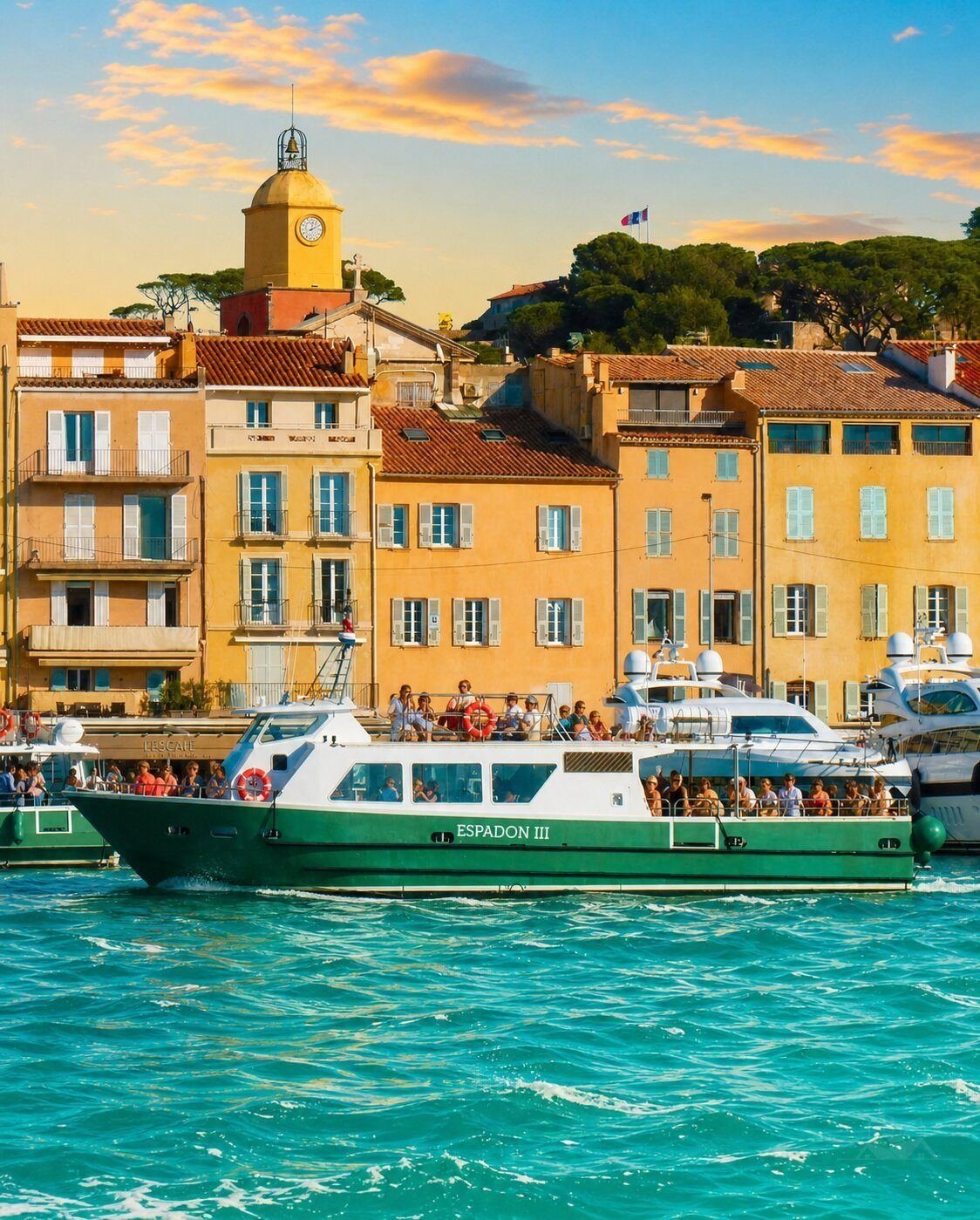
The Bateaux Verts sea shuttle links the two harbours all year. The crossing takes fifteen to twenty minutes according to the company's own information. At 2026 prices, a single costs €9.20 for an adult and a return €16.30. For children aged four to eleven, allow €5.00 and €9.20.
Frequency follows the season. In September and October, the company advertises twenty to forty departures a day from each harbour, which leaves plenty of choice of time. In November and December, the rhythm settles at nine departures a day. Bicycles travel for €3 one way, with the skipper's agreement, and dogs on a lead travel free.
During Les Voiles, the Bateaux Verts also run half-day race-watching trips, morning or afternoon, leaving from Sainte-Maxime as well as Saint-Tropez. It is the only way to see the boats close up, to leeward, rather than from the quayside. Book online: places go quickly during that week.
One last tip from a local. Take a morning sailing. You arrive before the race starts, you find a spot on the quaysides, and you head back in the late afternoon, just as the coast road begins to fill up.
Les Voiles is not the only fixture in the gulf. The Loro Piana Giraglia, created in 1953, is raced in June. The Yacht Club Italiano and the Société Nautique de Saint-Tropez run it together, over a course of about 241 nautical miles that starts from Saint-Tropez, rounds the Giraglia islet off Corsica and finishes in Genoa.
The Trophée Bailli de Suffren, created in 2001, also sets off from Saint-Tropez in June. It welcomes traditional and classic yachts, the Esprit de Tradition boats, the IOR, the IRC and vintage multihulls. The season then carries on: Cape 31 Gold Cup in October, Voiles d'Automne in November, then the winter fixtures.
In spring, the calendar starts again with the Hippocampe Cup in early May, Les Dames de Saint-Tropez the following week, and the Régate des Bravades in mid-May. In other words, something happens on the water almost all year, and Sainte-Maxime watches the show from the best seat in the house.
A visitor comes for a week and leaves. A resident, on the other hand, watches the bay change character with every season. In late September, the tall masts head up the gulf in the morning and back down in the evening, in full view from the Sainte-Maxime seafront without leaving home.
It is also the finest time of year on this coast. The holidaymakers have gone, the sea stays warm, the terraces stay open, and parking becomes easy again. Our tenants often tell us the same thing: they came for the summer, and they stayed for the autumn.
Finally, the gulf is measured in minutes rather than kilometres. Twenty minutes by boat to Saint-Tropez, five minutes by car to the centre of Sainte-Maxime, and the rest of the year to enjoy it all at your own pace.
That is precisely what a year-round tenancy agreement gives you.
Times, prices and the programme change from one edition to the next. The details above were taken on 11 September 2026 from the official websites of Les Voiles de Saint-Tropez, the Société Nautique and the Bateaux Verts. Check them before you set off: it takes two minutes, and it saves a wasted crossing.
A classic yacht race makes far more sense once you know three things. The first is the rig. A cutter carries a single mast, a schooner carries two, the forward one being the shorter. Out on the water, that outline alone is enough to tell the families apart with the naked eye.
The second marker is the start. The boats do not start from a standstill: they manoeuvre for several minutes before the signal, so they cross the line at full speed and in the right place. That is the most spectacular moment, and it happens before the official start, not after.
The third marker is the wind. In the gulf, the thermal breeze often gets up in the middle of the day, which explains why starts are given around eleven or midday rather than at first light.
With no wind, the race is postponed or cancelled: that happens often, and it is part of the game.
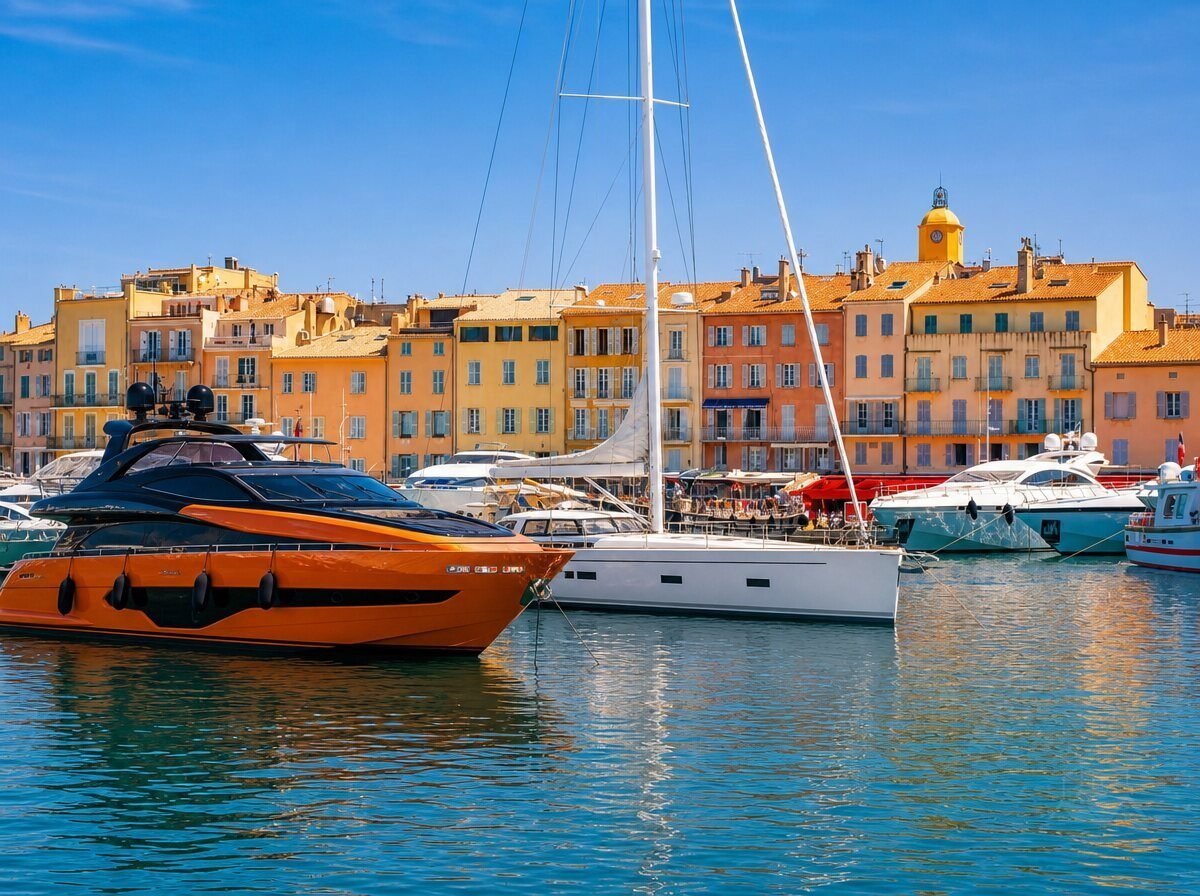
From land, the best viewpoints are on the Saint-Tropez quaysides and around the Portalet, where the starts go by. The Village des Voiles, free to enter, lets you see the boats alongside in the morning and at the end of the day, when the crews come in.
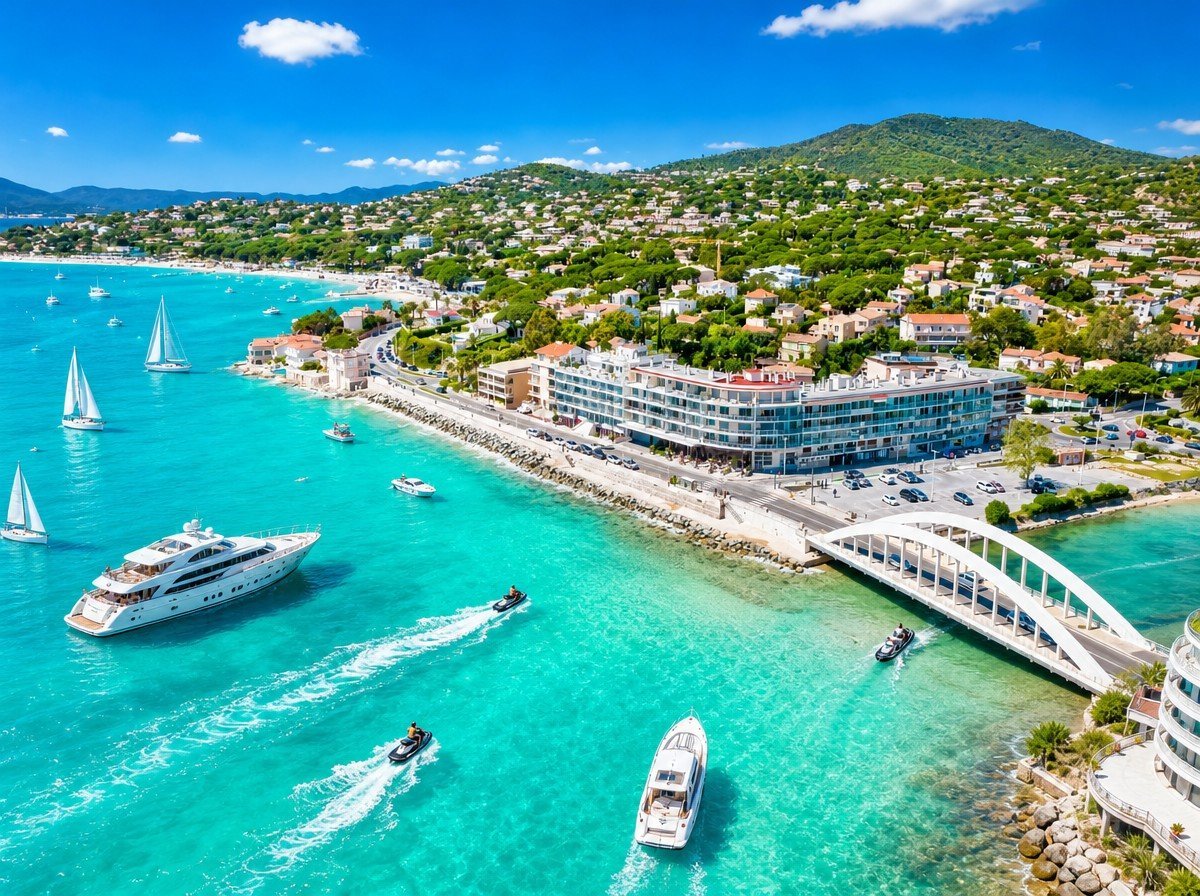
From Sainte-Maxime, the view takes in the whole gulf. In clear weather, you can pick out the tall masts heading up towards the point. It is not the same as being right alongside a twelve metre, but you can watch it from the seafront, with no ticket and no queue.
To really see it, you need to be on the water. The Bateaux Verts race-watching trips are designed for exactly that. They last half a day and leave in the morning or the afternoon, so you can fit the trip around the day's racing rather than the other way round.
Saint-Tropez lives to the rhythm of the event for ten days. The quaysides fill up, the terraces are fully booked, and parking becomes the main topic of conversation. For a resident of the northern shore, the shuttle settles that question in one move.
Book your crossing online, above all for challenge Thursday and for prize-giving Saturday. The company recommends booking from several harbours around the gulf, and Voiles week is the busiest of the late season.
Finally, bring something warm. In late September, the day is mild, but the sea breeze turns noticeably cooler on the way back, in the late afternoon. A windproof jacket transforms the evening crossing.
Sainte-Maxime faces Saint-Tropez, across the gulf. That position explains a great deal for anyone living here. The racing takes place opposite, the shuttle crosses in a straight line, and the evening return puts the sunset behind you rather than in your eyes.
It also explains the difference in market between the two shores. Saint-Tropez has a few thousand permanent residents, Sainte-Maxime around fourteen thousand. The most populous town in the gulf therefore keeps its schools, its neighbourhood shops and a stock of homes lived in all year.
For anyone working in the marine trades, the harbour or the restaurants of Saint-Tropez, it is often the most realistic housing option.
The crossing replaces the coast road, and the rent for the same type of property sits at a different level from one shore to the other.
Three checks are enough. First, the day's programme, published on the Voiles website: starts can be moved or cancelled for lack of wind. Then the shuttle times, which change with the season. Finally the weather, because a day of mistral makes the crossing livelier.
Allow half a day rather than an hour. Between the crossing, the walk to the quaysides and the wait for a race start, a trip to Les Voiles easily fills four hours. It is a weekend outing, not a lunch break.
Take something to drink and a hat, even in late September. The quaysides are exposed, the glare off the water is strong, and the shady spots fill up fast when two hundred and sixty crews are ashore.
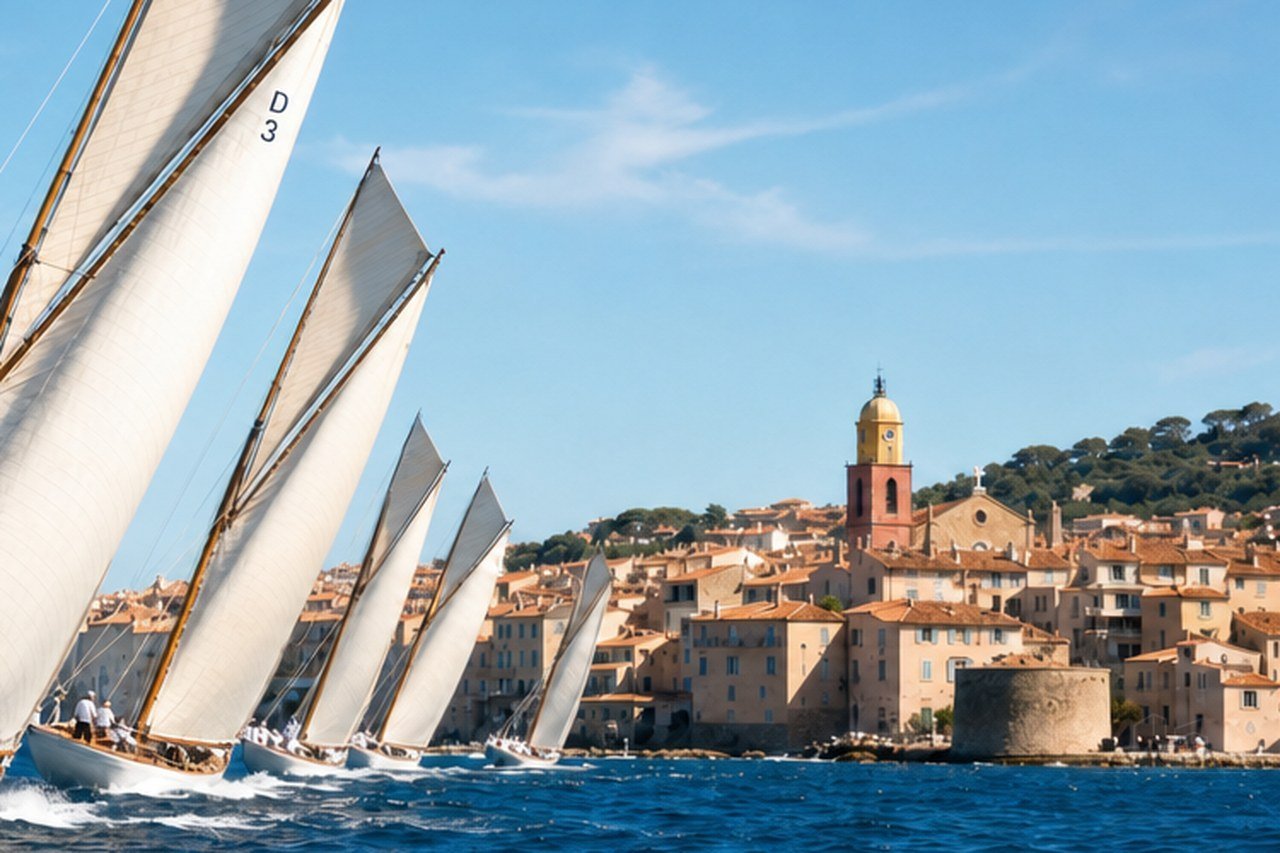
The appeal of Les Voiles lies as much in the hulls as in the racing. Some boats in the Tradition fleet are over a hundred years old and still sailing, maintained by specialist yards. They are wooden boats, rigged as they were in the early twentieth century, and relaunched after restorations that sometimes take several years.
The Régate des Centenaires, sailed on challenge Thursday, is devoted to them. Seeing ten or so classic hulls start together remains one of the most photographed moments of the week, and it happens at half past twelve, a convenient time for anyone arriving on the morning shuttle.
At the other extreme, the Maxi Yachts impress by sheer size. Nearly fifty are announced for 2026, which makes a record fleet according to the organisers.
Between the two, the Moderns account for the bulk of the starts and the results.